
October 21, 2026 - PBS News Hour full episode
10/21/2026 | 57m 46sVideo has Closed Captions
October 21, 2026 - PBS News Hour full episode
October 21, 2026 - PBS News Hour full episode
Problems playing video? | Closed Captioning Feedback
Problems playing video? | Closed Captioning Feedback
Major corporate funding for the PBS News Hour is provided by BDO, BNSF, Consumer Cellular, American Cruise Lines, and Raymond James. Funding for the PBS NewsHour Weekend is provided by...
October 21, 2026 - PBS News Hour full episode
10/21/2026 | 57m 46sVideo has Closed Captions
October 21, 2026 - PBS News Hour full episode
Problems playing video? | Closed Captioning Feedback
Where to Watch PBS News Hour
PBS News Hour is available to stream on pbs.org and the PBS app.
Providing Support for PBS.org
Learn Moreabout PBS online sponsorshipAMNA NAWAZ: Good evening.
I'm Amna Nawaz.
GEOFF BENNETT: And I'm Geoff Bennett.
On the "News Hour" tonight: Russia releases an imprisoned American and agrees to resume negotiations to end the war in Ukraine, as relations between Washington and Moscow appear to be warming, potentially at Ukraine's expense.
AMNA NAWAZ: Elon Musk reportedly ordered the slowdown of Ukraine's Starshield defense systems.
How the world's richest man has gained such power over U.S.
security interests.
GEOFF BENNETT: And abortion rights are on the ballot in Idaho, where the state's near-total ban has dramatically reshaped reproductive health care, and voters now have a chance to decide its future.
SUZANNE GALLUS, Idaho Resident: We just had no idea how important abortion care was, and when you take it out, it's like the Jenga tower just falls.
(BREAK) GEOFF BENNETT: Welcome to the "News Hour."
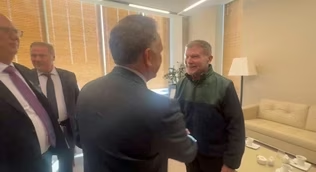
Russia today freed an American imprisoned for the last four years.
Stephen Hubbard was captured in Eastern Ukraine and was convicted of fighting against Russia.
AMNA NAWAZ: The 74-year-old retired teacher from Michigan was reportedly freed without a swap deal.
U.S.
special envoy Steve Witkoff greeted Hubbard in St.
Petersburg.
He also met with Russian President Vladimir Putin and praised Putin in unusually glowing terms.
Nick Schifrin begins our coverage.
MAN: Mr.
Steve Witkoff.
NICK SCHIFRIN: In St.
Petersburg today, filmed by Russian state TV, President Trump's top envoy freeing a detained American.
Ambassador Steve Witkoff embraced Stephen Hubbard, imprisoned for four years and facing another nearly five years of detention in a justice system overseen by one man whom Witkoff personally thanked.
STEVE WITKOFF, U.S.
Special Envoy to the Middle East: We just left President Putin.
He sends you blessings and wishes you good things.
STEPHEN HUBBARD, Released American Prisoner: OK.
Really?
He does?
NICK SCHIFRIN: Tonight, the 74-year-old Hubbard is flying home to the U.S.
for evaluation, and a U.S.
official tells "PBS News Hour" he's in OK condition.
Hubbard's a retired schoolteacher from Michigan who moved to Ukraine with his wife in 2014.
He was captured four years ago by Russian troops as they took over parts of Eastern Ukraine.
And then he was convicted by a Moscow court, where the conviction rate is over 99 percent, for being a -- quote -- "Ukrainian mercenary."
And multiple U.S.
officials say, unlike previous Russian detainee releases, like Brittney Griner, who was swapped for convicted arms dealer Viktor Bout, Hubbard was released without a swap.
STEVE WITKOFF: So good to see you.
VLADIMIR PUTIN, Russian President: Hello.
NICK SCHIFRIN: Ahead of the release, Witkoff greeted Putin.
STEVE WITKOFF: Thank you for having us.
NICK SCHIFRIN: And the two lavished mutual praise, even if Putin is an accused war criminal indicted by the International Criminal Court.
VLADIMIR PUTIN (through translator): I know that President Trump pays special attention to this matter, primarily for humanitarian reasons.
STEVE WITKOFF: You talk so much about my president, President Trump, being a humanitarian.
You are a humanitarian also, sir.
And I salute that.
I commend you, and I thank you again.
NICK SCHIFRIN: European officials worry Witkoff and the Trump administration consider Putin a partner in peace and business, something Putin today made explicit.
VLADIMIR PUTIN (through translator): Both sides would be interested in discussing issues related to our plans to restore bilateral relations, including in the area of economic cooperation.
NICK SCHIFRIN: It was Putin who launched the full-scale invasion of Ukraine.
And, today, he agreed to relaunch a U.S.
Russia-Ukraine diplomatic track that last met in February and helped produce releases of prisoners of war.
Today, Ukrainian President Volodymyr Zelenskyy agreed, although he prefers a leaders-level summit.
VOLODYMYR ZELENSKYY, Ukrainian President: It's important to negotiate trilaterally.
I think this is the best way President Trump, with his leadership, and me and Russian leader, trilaterally, better with Europeans, but minimum trilaterally, I think so.
This is important.
NICK SCHIFRIN: And yet the war grinds on in Russia's battlefield of choice, Ukrainian cities.
Today, a drone carved through Kiev apartments, killing two people.
And Ukrainian officials tell me their ability to intercept Russia's jet-powered drones, including those that hit Kyiv today, is still hampered because of limits on the speed their interceptors can fly, limits recently imposed, Jeff, by SpaceX.
GEOFF BENNETT: And, Nick, what more have you learned about the curtailing of the Starlink and Starshield services in Ukraine?
NICK SCHIFRIN: The bottom line is, limitations, as I just said, are still there.
And reminder, Geoff, of what that means and why this is so important.
Ukraine's offensive mid-range drones, but also defensive drone interceptors, use SpaceX navigation to feed video, and those are the little satellites that SpaceX creates.
Higher-end units use Starshield, which is designed for the military, as opposed to Starlink, which is designed for commercially.
And these Starshield receivers are literally attached to the drones themselves.
They're faster.
They're more encrypted than Starlink, and that makes them much less jammable by Russia.
And that makes them what multiple officials told me today were a game-changing capability when it comes to the war.
But SpaceX limited the speed where these receivers work on the drones to about 100 miles an hour, and that makes the defensive interceptors and their offensive drones much less effective, limiting Ukraine's ability to wage the war, period.
That's why it's so important to Ukraine.
And to underline a point, Geoff, there is no other company, nor any other country with this technology.
Only SpaceX has created this network and this capability, giving the company and founder, Elon Musk, enormous influence over the war in Ukraine, but also over the U.S.
military and other NATO militaries that use the exact same technology.
GEOFF BENNETT: And on that point, what's the latest on the source, the known source of the slowdown?
NICK SCHIFRIN: Today, Secretary of State Marco Rubio denied that the president or anyone else in the U.S.
government had anything to do with the speed limitations.
MARCO RUBIO, U.S.
Secretary of State: The president has nothing to do with the decisions that are made by Starlink and Starshield and by Mr.
Musk.
That's a private company.
The president doesn't run that company and can't direct that company to do anything.
NICK SCHIFRIN: Now, multiple officials tell me that, even if Starshield is considered a military company or a military platform, Geoff, SpaceX and Elon Musk do have the ability to throttle, to limit the speed that the receivers work.
And, again, that underscores the company's power and Musk's influence.
But The Wall Street Journal today reported that Musk spoke to President Trump before the throttling, before the limitations were actually imposed.
As for Trump and Musk themselves, Musk pointed the finger at Trump last week.
He tweeted -- quote -- "Starshield systems are owned and controlled by the U.S.
government.
Any limits on speed or usage are decided by the U.S.
military and ultimately the president of the United States."
But President Trump said this last Friday: QUESTION: Was it Elon Musk who decided to temporarily pause Starlink access for the Ukrainian military?
DONALD TRUMP, President of the United States: Well, I don't know if it was anybody, because it wasn't me.
And I don't think it was Elon.
And from what I understand, it's the same as it's always been.
NICK SCHIFRIN: It is not the same as it's always been for Ukraine.
This afternoon, the president again denied he was involved.
And when asked about Musk, the president replied: "I don't know who did it" -- unquote.
Bottom line for Ukraine, the officials tell me they don't care who limited the speed.
They just want to see it fixed.
GEOFF BENNETT: Nick Schifrin, thanks, as always.
NICK SCHIFRIN: Thank you.
AMNA NAWAZ: For more on all of this, we turn now to retired Air Force Colonel Charles Galbreath, who focused on space operations during his 30-year career in the military.
He's now at the Air Force Association's Mitchell Institute.
Colonel, welcome to the show.
So, to pick up where Nick left off there, from what you know about Starlink and its government controlled system of Starshield, how they run, could one person, namely, Elon Musk, issue that kind of order to throttle or slow down that system?
COL.
CHARLES GALBREATH (RET.
), U.S.
Space Force: Well, first, thank you for the opportunity to speak with you this evening.
So, Starlink and Starshield are basically the same system, with the exception of enhanced encryption capability on Starshield.
The other key distinction is, Starlink is completely contractor-owned and contractor-operated.
So, SpaceX, Elon Musk, and the contractors that work for him control that system.
Starshield is supposed to be a government-controlled or government-owned, but contractor-operated system.
So there should be two different paths to make determinations on how much bandwidth, what speeds, what areas get the type of coverage that they need.
So, regarding Starlink, that is a private company.
And, certainly Elon Musk, as that proprietor, could make those decisions, as long as they're consistent with the user agreements that they have in place with the many users that leverage that system.
Starshield should have been controlled by the government.
AMNA NAWAZ: So do I take that to mean that Elon Musk as a private citizen would not be able to issue an order that would throttle or limit the speed of the Starshield system?
Is that what you're saying?
COL.
CHARLES GALBREATH (RET.
): He should not be able to do that.
That's correct.
AMNA NAWAZ: So, what do you make of the reporting and some of the conflicting messaging we're hearing from the people involved in this story at this point, that Musk is pointing the finger at the president of the United States, saying he made a decision to do so?
Reporting suggests that Musk made that decision and issued the order.
What do you make -- how do you make sense of those?
COL.
CHARLES GALBREATH (RET.
): So I -- there's a lot of misinformation going around certainly right now, and it will take a while to get to the bottom of actually what happened.
I do believe that the government should have been in control and made the decision on Starshield, rather than Elon Musk or anyone at Starlink.
And, frankly, any military operation and the impacts that a system like this could have on it, that needs to be through consultation with senior leaders, such as the Space Command commander, the EUCOM commander, and the chairman of the Joint Chiefs of Staff.
Those three individuals should have been in consultation with the president, if that's where the decision was made.
And, certainly, if Elon Musk unilaterally made that decision, those three should be standing up and saying, you don't have that authority, put it back the way it belongs.
AMNA NAWAZ: Colonel, more broadly speaking here, when you look, as Nick was reporting, on the reliance of the U.S.
military of Ukraine's operations at this point, too, on a system like SpaceX, which is run by a private citizen, Elon Musk, what do you make of that reliance, of that sense of control that this one company has over those operations?
COL.
CHARLES GALBREATH (RET.
): It is a significant amount of control that this one company has.
And it's not just Starlink and the communications capability that it provides, but also SpaceX and the launch capability that it provides.
SpaceX and the Falcon rocket are the premier launch capabilities for the United States right now, setting the world record in terms of launch cadence.
And the military, the intelligence community, national security at large is very much dependent on maintaining a good relationship with Elon Musk and access to the SpaceX boosters.
When you add on top of that the control over Starlink and the communications network and all those that depend on it, that is a significant amount of sway or leeway that that leader, that individual, that private citizen can have.
You talked about the military implications.
And, certainly, Ukraine is very much reliant on Starlink for their military operations.
And we have seen this happen in the past.
A few years ago, it was reported that Elon Musk directed a slowdown of the capability or the limitations on how Ukraine could use Starlink that had significant military implications.
And so here it is again, once again in the headlines.
And I do believe that we need to have a good investigation as to what happened here and ensure that there are checks and balances in place to ensure that national security interests are preserved through national security channels and not through the choices of an individual.
AMNA NAWAZ: That is retired Air Force Colonel Charles Galbreath joining us tonight.
Colonel, thank you so much for your time.
COL.
CHARLES GALBREATH (RET.
): Thank you.
GEOFF BENNETT: We start today's other headlines with a major cybersecurity threat that prompted a scramble today to protect Web sites around the world.
Government Web sites were among those temporarily taken offline as officials rushed to install security patches.
Others remain offline entirely.
At the center of the threat is a vulnerability involving PHP.
That's a programming language used by millions of Web sites.
The FBI and National Security Agency warned that hackers could exploit the flaw to take control of Web sites and potentially compromise sensitive information.
OpenAI says its artificial intelligence models helped uncover the vulnerabilities.
In Toledo, Ohio, roughly 1,000 people were ordered to evacuate their homes today following a chemical tank explosion.
MAN: You can literally see the particles flying in the sky.
GEOFF BENNETT: The overnight explosion at MC Tank Transport blanketed the surrounding area in a thick fog-like haze.
The tank contained a chemical used in some plastics and paints, which officials warned could still pose an explosion risk.
Video from today shows a plume continuing to rise from the site.
Fears of another explosion have hampered efforts by firefighters and hazardous material crews.
Some residents reported burning eyes and irritated throats, though the city's mayor sought to reassure the public about the potential health risks.
WADE KAPSZUKIEWICZ (D), Mayor of Toledo, Ohio: There are levels of exposure to something like this that are unpleasant, but not necessarily dangerous to human health.
GEOFF BENNETT: Local schools were canceled today, and the Arkansas-based company that runs the site says it's working with local authorities to ensure the safety of those affected.
The U.S.
Supreme Court is blocking the Trump administration from enforcing new restrictions on gender-affirming care for transgender prisoners.
The decision leaves a lower court's order in place, allowing as many as 1,000 transgender prisoners to continue receiving hormone therapy and other treatments, at least for now.
Meantime, Justice Elena Kagan is criticizing her conservative colleagues over a series of rulings she says are weakening American democracy.
Speaking at an event in Washington, Kagan pointed to recent decisions on voting rights and campaign finance, among others.
She said those rulings have contributed to, in her words, a democracy that does not work as well as it should.
The U.S.
State Department has ordered nonessential government employees and their families to leave Saudi Arabia, warning that hostilities between Houthi rebels and Saudi forces could escalate rapidly.
Just today, Saudi authorities said two people were killed by falling debris from an intercepted drone attack.
Meantime, in Southwestern Yemen, Iran-backed Houthi forces released this footage, claiming it shows clashes with Saudi-backed government troops.
Aid groups warn the fighting has disrupted water supplies for some three million people, while garbage piles up and basic public services have all but collapsed.
HISHAM AL-MANSOURI, Taiz Local Council Member (through translator): I developed severe infections because of this garbage.
This is a huge disaster.
I'm speaking to you as a member of the local council.
We're suffering, and perhaps the people will suffer more than this.
The garbage is now close to our neighborhoods.
GEOFF BENNETT: Meantime, Riyadh's international airport partially reopened to domestic flights today following a series of strikes that killed at least 13 people.
But major international carriers, including Lufthansa and Air France, say they won't resume service until the middle of next month.
Meanwhile, in the occupied West Bank, New York congressional candidate Brad Lander says he was detained and later released by Israeli forces while helping Palestinian farmers harvest olives in the West Bank.
He posted a video to social media that he filmed while being detained.
BRAD LANDER (D), New York Congressional Candidate: We have been detained by the Israeli military for harvesting olives.
And let's be clear, occupation is a crime under international law.
Harvesting olives is not a crime under any law.
GEOFF BENNETT: He was later released, but several of the volunteers and American rabbis who were on the bus with him remain in custody.
Israeli authorities say the group had not obtained permission for the harvest.
The annual olive harvest has been marked by violence, including attacks by Israeli settlers against Palestinian farmers and their communities.
Turning now to Europe, thousands of students and teachers held protests across Greece today calling for education reform after similar demonstrations have gripped France for weeks.
(CHANTING) GEOFF BENNETT: In Athens, riot police kept a close watch as demonstrators marched through the streets there.
Many expressed solidarity with students in France, where protests have turned violent.
President Trump and his allies have blamed Muslim migrants for the unrest in France without offering evidence to support those claims.
Speaking to reporters in Doha today, French President Emmanuel Macron pushed back against those accusations.
EMMANUEL MACRON, French President (through translator): There has been foreign manipulation of information in the aftermath, yes.
And that has led to comments that are as unacceptable as they are stupid for many people, including foreign leaders.
GEOFF BENNETT: When a reporter asked if that included President Trump, Macron replied, "Among others."
Some encouraging health news from the Vatican today.
Doctors for Pope Leo say final tests show he needs no further treatment for lung cancer.
The 71-year-old pontiff underwent surgery last week to remove the lower portion of his right lung after doctors discovered a cancerous growth.
Leo returned to the Vatican over the weekend and resumed his public appearances today.
A judge in New Mexico ordered Meta to pay $25 billion in penalties for misleading users about their privacy on Facebook.
It's one of the largest fines ever levied on the company.
The fine stems from the 2016 election, when Cambridge Analytica combed Facebook data for targeted political ads.
Meta has said it plans to appeal the verdict.
Its stock ended higher after the news.
Elsewhere on Wall Street today, markets posted solid gains after some solid corporate earnings.
The Dow Jones industrial average added 360 points on the day.
The Nasdaq jumped more than 1 percent.
The S&P 500 rose about half-a-percent.
Still to come on the "News Hour": political strategists discuss the state of play in the final weeks before Election Day; a look at the hundreds of U.S.
citizens who have been detained by ICE; and we speak with former South Carolina Governor and World Food Program Director David Beasley about why he's leaving the Republican Party.
The midterm campaign is entering its final stretch, and the attacks are getting increasingly personal.
In Ohio, Republican gubernatorial candidate Vivek Ramaswamy's campaign is behind an extraordinary attack ad featuring the estranged mother of his Democratic opponent, Amy Acton, disputing Acton's account of her own childhood.
It's a striking example of just how far candidates are willing to go to win votes in this high-stakes election.
For analysis of that and more, we turn tonight to Faiz Shakir here, a Democratic strategist and senior adviser to Senator Bernie Sanders, and longtime Republican strategist Whit Ayres.
Whit, we should note, is on the board of the "News Hour"'s parent organization, WETA.
It's good to see you both.
Thanks for being here.
WHIT AYRES, Republican Strategist: Good to be here.
GEOFF BENNETT: So let's start with this ad from the Vivek Ramaswamy's campaign.
Again, in it, the estranged mother of his Democratic opponent, Amy Acton, challenges Acton's account of her own upbringing, to include allegations of sexual abuse by her stepfather.
Here's part of it.
DONNA ARTHUR, Mother of Amy Acton: It's not easy for a mother to say this, that Amy has a serious problem.
She is a liar.
She lies about her past.
She says she grew up living in a tent.
None of that is true.
GEOFF BENNETT: So this ad is sparking criticism from both sides of the aisle.
What is the political calculation behind an ad like this?
WHIT AYRES: Geoff, there's a widespread assumption in the political consultant community that negative ads work.
And a lot of them do if they're credible, if they're believable, and especially if they use the opponent's words against them.
But it's also possible to do negative ads that blow up your own campaign, those that are simply not believable, that are easily rebutted, or just make your skin crawl.
And that Vivek ad probably qualifies on at least two of those criteria.
GEOFF BENNETT: Is there evidence that attacks like these, these personal attack ads work?
FAIZ SHAKIR, Democratic Strategist: Well, sometimes.
And they're disgusting, so we all note that.
And I think it's important to understand the purpose.
What are they trying to do here?
It's a defensive ad.
You feel like here's a candidate who's losing and is now going to throw a very desperate heave into the end zone to see if they can to win this race.
And I think, in my view, the reason you do this is because you are trying to distract voters.
You have nothing to say on the major issues, whether it's housing or health care, electricity rates, anything that's really going on in the country around gas prices.
So instead of talking about issues, having a debate, you demonize a person.
And this isn't just happening in Ohio, by the way.
You're seeing in Talarico, he has a mental health issue or something.
We got Abdul El-Sayed might be a jihadist and a terrorist.
And we have got Troy Jackson may have some family issues that we're going to talk about.
These are all distractions.
And to the point of whether they work, yes, they can effectively move a discussion into a zone that I don't think the voters really care about.
We will see how it impacts the vote.
GEOFF BENNETT: Vice President J.D.
Vance today, he criticized Republicans who objected to the Ramaswamy ad.
Does that tell us something about where the Trump Republican Party is today, that the controversy isn't the ad itself, but Republicans criticizing the ad?
WHIT AYRES: Well, that's a typical comeback when something like this happens.
But I guarantee you most independent voters and I suspect most Republican voters are not going to appreciate that ad in Ohio.
GEOFF BENNETT: President Trump, he heads to South Carolina tonight after campaigning in North Carolina and Kansas earlier this week.
These are states that Republicans would ordinarily expect to win.
Why is he spending so much time defending Republican territory?
What does that say about the state of the race?
FAIZ SHAKIR: Well, first off, you are -- Democrats are on the front foot in a lot of places that Trump won.
And so he is seeing what we are all seeing, which is that Republican voters are staying home at the moment.
They're not enthused.
They're not excited.
And in fact a lot of people are calling themselves independent, no party preferences.
They're moving off of a Republican Party, and, quite frankly, some even on the Democratic side.
I think it'll be these people, independent-minded folks, who are going to sway this election.
Trump is trying to mobilize his space.
And he does have still a fair amount of support within the Republican Party.
In my view, he's going to these places to try to energize turnout.
However, I think it'll backfire on them, because a lot of these independent-minded folks are upset with his agenda, and I think are very likely to move off of the Republican Party and support some of these Democratic candidates in Kansas and Florida and Texas.
GEOFF BENNETT: How do you see it?
Is the president more valuable on the campaign trail or off of it at this point?
WHIT AYRES: Geoff, it all depends on the state and the district.
But we know that the president is very good at turning out low-propensity voters, those who only vote in presidential elections, or, as we discovered, only vote when Donald Trump's on the ticket, which is why he keeps saying, pretend I'm on the ticket to get these low-propensity voters out.
Every campaign is dependent on getting your base out and also persuading those people who are still up in the air.
We will see if this is effective at getting the base out.
GEOFF BENNETT: A new New York Times/Siena poll puts President Trump's approval rating at 36 percent.
This is a record low in that survey, and it follows similar findings in other national polls.
How much does that complicate things for Republicans in competitive races?
FAIZ SHAKIR: Well, it complicates it a lot.
They're not going before the voters with an agenda.
And right now there is a lot of anger and a desire for people to hear some solutions.
I mean, think about health care.
What are you going to do to make sure my costs on health care go down?
What are you going to do to make sure gas prices go down?
And so, when he's going out and talking - - and I welcome the president to keep campaigning everywhere he'd like to go, because he still hasn't found a message.
He's not saying to the voters, keep me in office, keep my Republican rubber stamps all over this nation because we have got this great agenda that we're going to bring to you.
So, at this stage, the opportunity is here for the Democrats.
The opportunity is for realignment of a lot of voters.
And I suspect we're going to see it on November 3, a lot of people who ordinarily would not call themselves Democrats who are going to say, I'm giving you a chance.
And with that chance is an opportunity to change a lot of red states in America.
GEOFF BENNETT: What's the risk if Democrats essentially try to nationalize every race and make every Republican candidate answer for President Trump?
WHIT AYRES: Geoff, we know that the single most important statistic in midterm elections is the president's job approval.
The president's party almost always loses seats.
So the last 80 years, the only exceptions were 1998 and 2002.
But the number of seats lost is heavily dependent on the president's job approval.
When the president is above 50 percent, the average number of House seats lost is 14.
When the president's job approval is below 50 percent, the average loss of House seats is 32.
The problem for Republicans right now is that the president's job approval keeps ticking down, ticking down every day, and he keeps taking positions that make it worse.
Siding with Putin and Russia against Ukraine is a major problem.
If you ask Americans, are they more sympathetic to Russia or are they more sympathetic to Ukraine, the percentage of Americans more sympathetic to Russia is 4, not 40, 4.
So the president has put himself in a position and taken a position that is not shared by 96 percent of Americans.
That doesn't help his job approval go up, and that's what Republicans need right now.
GEOFF BENNETT: Whit Ayres and Faiz Shakir, thanks to you both.
FAIZ SHAKIR: Thanks, Geoff.
WHIT AYRES: Pleasure.
AMNA NAWAZ: This November, voters in Virginia, Nevada, Missouri, and Idaho will decide on the future of reproductive rights in their state.
In deeply red Idaho, a citizen-led initiative faces an uphill battle to restore some abortion rights.
Special correspondent Sarah Varney reports on whether the fallout from the overturning of Roe v. Wade and frustration over the current law will be enough to sway even conservative voters to seek change.
ABBY NICHOLS, Idaho Resident: She said: "This is a nonviable pregnancy.
This is incompatible with life.
What do you want to do?"
SARAH VARNEY: Last year, 13 weeks into her wanted pregnancy, Abby Nichols found out her baby had a severe genetic disorder.
ABBY NICHOLS: The doctor came in and she checked for a heartbeat.
She just quietly did it on an iPad, and then she said there was.
And it was a really sad moment.
SARAH VARNEY: Because of Idaho's abortion law, Abby's doctor was not allowed to end her pregnancy.
ABBY NICHOLS: There's like a piece of you that hopes that they can help you.
Like, you're just like, no, my doctors can help me, because that's what doctors do.
But you also have heard of other women who haven't received care, and you just are starting to, like, realize that that's you too.
SARAH VARNEY: The next week, Abby, along with her husband, flew to Seattle to get an abortion.
She says the experience was incredibly sad and isolating.
But it's also one that motivated her family to join a fight to change Idaho's law.
WOMAN: It is for that baby who was so sick, and her parents made the right decision for her.
SARAH VARNEY: On a sunny Saturday in early October, Abby's parents' home became base camp for volunteers door-knocking in support of Proposition 1.
The ballot measure would allow for abortion up to fetal viability, which doctors say is about 24 weeks, and in case of a medical emergency that threatens the woman's health.
It would also prevent the government from punishing physicians who provide abortion care.
MELANIE FOLWELL, Idahoans United For Women and Families: This is a hard fight.
SARAH VARNEY: One of the people who helped get Prop 1 on the ballot is Melanie Folwell.
MELANIE FOLWELL: The tricky thing about Idaho's ban is, it doesn't really care at what your own personal beliefs are.
It doesn't really care what your partisanship is.
It doesn't really care if you have never considered an abortion.
It comes for you all the same.
SARAH VARNEY: In the four years since nearly all abortion care was criminalized, Idaho has lost 94 physicians who practice obstetrics and gynecology.
That's about one out of three OB-GYNs in the state, and three hospitals have closed their maternity wards.
Folwell, a mother and native Idahoan, believes this citizen-led effort is the only option to protect women's health care in the state.
MELANIE FOLWELL: I think that the idea that our legislature is going to fix the ban, fix the problems with the ban is a fool's errand.
And so that is why this election is so incredibly critical.
It's this or nothing.
SARAH VARNEY: But getting a majority of voters on board will not be easy.
Idaho is a state dominated by conservative and anti-abortion sentiments.
Nearly 70 percent of voters here backed President Trump last election.
JADE MURPHY, Idaho Resident: Personally, I will be voting no on Prop 1.
JANET NEWBERRY, Idaho Resident: I know it's for abortion, and I am actually against it.
JEFF BASTERRECHEA, Idaho Resident: I think states have the right to regulate abortion, and therefore I am not going to support the ballot.
STATE SEN.
CAMILLE BLAYLOCK (R-ID): I understand that this is a -- but this is a personal issue.
I mean, I'm a mom, I have carried two babies to term.
SARAH VARNEY: State Senator Camille Blaylock, who represents a Western suburb of Boise, feels the measure goes too far and worries voters don't fully understand what it would do.
STATE SEN.
CAMILLE BLAYLOCK: And so when I hear that there's a level of Republicans that support this, my guess is that there's just misinformation, that they hear a one-liner like women are dying because of Idaho's laws, and that's just not -- that's just not true.
And so, if they had the facts, then maybe they would make a different decision.
SARAH VARNEY: Idaho's near-total abortion ban went into effect four years ago.
It allows a doctor to perform an abortion to prevent the death of a pregnant woman or in the case of rape or incest that is documented by law enforcement.
STATE SEN.
CAMILLE BLAYLOCK: Every word in our current law has been precisely thought about, debated, and put there on purpose.
When you open up that law for changes here in Idaho, you do have the gamut in our legislature.
And so I have concerns of if we open it up and try to change it too drastically.
SARAH VARNEY: Blaylock and more than a dozen state legislative candidates have promised to vote to overturn the initiative if passed.
STATE SEN.
CAMILLE BLAYLOCK: I don't want to appear as if I am being flippant or not respecting that.
But also I have my moral soul, and I answer to my God, and there's a few things that just really hit there that I, in good conscience, if I had an opportunity to overturn something that I didn't agree with, when -- at this level, I couldn't -- I couldn't not do that.
SARAH VARNEY: But not all Republicans in the state are happy with the current law.
STATE SEN.
JIM WOODWARD (R-ID): It didn't take long to understand the problem that we had created, because I was part of creating that problem.
SARAH VARNEY: Six years after voting for Idaho's abortion ban, state Senator Jim Woodward admits women's health care has gotten worse, especially in Northern Panhandle communities like his.
STATE SEN.
JIM WOODWARD: Why are we making this so much harder for people than it has to be?
And so we need to find some new spot, some new balance that accommodates the reality of pregnancy.
SARAH VARNEY: To help strike that balance, Woodward introduced a bill last year to allow abortions to prevent a serious health risk and in cases of a fatal fetal condition.
It went nowhere.
STATE SEN.
JIM WOODWARD: I don't support elective abortions, but we need to get our policy back in line with the people of Idaho.
SARAH VARNEY: But observers say the measure's success hinges on Republicans and other Idahoans who are open to reconsidering their view on abortion.
SUZANNE GALLUS, Idaho Resident: Ready?
Ready?
SARAH VARNEY: People LIKE Suzanne Gallus.
Suzanne is a mother of seven from Northern Idaho.
As a lifelong Catholic, she believed in the church's teaching that abortion is immoral.
SUZANNE GALLUS: I wanted to believe what the church said, because it sounded perfect.
And we didn't really have to grapple with it because abortion was legal.
SARAH VARNEY: But once it became illegal, Suzanne started doing research and talking to people in her community who supported reproductive rights.
SUZANNE GALLUS: We just had no idea how important abortion care was.
And when you take it out, it's like the Jenga tower just falls.
SARAH VARNEY: That's when she decided to get involved, knocking doors to support the measure.
SUZANNE GALLUS: The number of stories of people that I heard was overwhelming to me, because I would hear... SARAH VARNEY: Where this issue had affected them personally or someone that they knew.
SUZANNE GALLUS: Yes.
Yes, or somebody that they knew.
So it just really solidified in my mind how many people are actually affected by abortion.
SARAH VARNEY: She's hopeful that her fellow Idahoans will see it the same way.
SUZANNE GALLUS: No matter what your personal beliefs are about abortion, I think we can all agree, when a personal medical decision comes up, who should be making those hard decisions?
Should it be you and your husband or your partner and your doctor and your God, or should it be the government?
STATE SEN.
CAMILLE BLAYLOCK: This is -- this is going to be close.
SARAH VARNEY: Early polling indicated the initiative could get enough support to pass.
Still, conservative leaders like Camille Blaylock are confident voters will reject the measure.
STATE SEN.
CAMILLE BLAYLOCK: This is an issue that has been politicized for decades in our country, and I think it's something that will bring Republicans out because they want to make sure that they can cast their vote to show that they're pro-life.
SARAH VARNEY: But proponents remain optimistic about a victory in November and what it will say to the rest of the country.
MELANIE FOLWELL: Our success in Idaho would send a message that these kinds of bans, these kinds of policies are deeply unpopular, and that even in places that are very conservative, that are among the reddest states in the entire country, it's not that simple.
SARAH VARNEY: For "PBS News Hour," I'm Sarah Varney in Boise, Idaho.
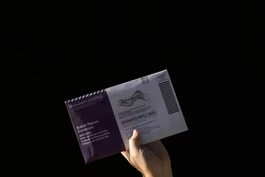
AMNA NAWAZ: Voters will also weigh in on more than 140 other ballot measures next month in 40 states.
Our Liz Landers has more on the issues on the ballot across the country.
LIZ LANDERS: From abortion to voter I.D.
to debates over transgender rights, the measures on this year's ballots touch nearly every corner of the political debate.
Republicans are counting on some of them to energize their base in a tough midterm environment.
For more on the issues heading before voters, I'm joined now by Reid Wilson, editor and founder of Pluribus News, a site that covers politics and policy at the state level.
Reid, thank you for joining us.
REID WILSON, Founder, Pluribus News: Thanks for having me.
LIZ LANDERS: The midterm cycle historically does not go well for the party in the White House.
So why the state level are Republicans looking to these ballot measures now?
And what does the enthusiasm gap look like?
REID WILSON: Well, Republicans hope that these ballot measures will gin up enthusiasm among voters who are not terribly excited to show up to vote.
Democrats say that they're very excited to show up to vote this year.
Fewer Republicans say that.
So if Republicans stay home, that's bad for their party, obviously.
Now, these ballot measures are aimed at ginning up that turnout, just like ballot measures in 2004 that banned same-sex marriage were meant to get evangelical voters excited to vote for George W. Bush.
Now, a lot of the academic research shows that didn't actually work.
Bush's own campaign advisers say he won without those measures.
So it's not terribly clear that the strategy is going to work.
LIZ LANDERS: As we reported, abortion is on the ballot in four states.
Idaho, Nevada, and Virginia would protect abortion rights, while Missouri would roll back the protections that voters approved in 2024.
Does abortion on the ballot help one party more than the other this year?
REID WILSON: I don't think so.
I think that abortion is an issue that we portray as polarizing, but I think the vast majority of Americans are in favor of abortion rights, based on the measures that have passed in just the last few years.
I think voters really don't like it when rights are taken away from them, and so we have seen abortion protection measures pass in even some very red states like, as you mentioned, Missouri.
LIZ LANDERS: Six states have measures limiting voting to U.S.
citizens and several others have voter I.D.
measures.
It's already a crime to vote in a federal election if you are not a U.S.
citizen.
Supporters call these election security measures, and critics call them redundant.
What are they actually going to change here?
REID WILSON: Well, they wouldn't change much of anything, because, in the six states where these measures are up, Alaska, Arizona, Arkansas, Kansas, South Dakota, and West Virginia, there are no jurisdictions that allow noncitizens to vote.
There are a few jurisdictions in places like San Francisco, Oakland Washington, D.C., and some small towns in Maryland and Vermont, that allow noncitizens to vote in local elections, on school boards, city council races.
But no noncitizen is allowed to vote in a federal election, and that's federal law.
These things would not change that.
They would only stop local officials from allowing noncitizens to vote in local races, which, again, they can't in those states.
LIZ LANDERS: Right.
Four states will vote on restricting transgender girls from girls sports.
Most of these are in Democratic-led states.
Why is this going straight to voters, rather than the legislature?
REID WILSON: So there are two ways that ballot initiatives can make it to the ballot.
One is citizens petitioning, signing a petition, getting something on the ballot that way.
Another is when a legislature refers an issue to the ballot.
These are blue states where the legislature is not going to pass a ban on trans women in girls' sports.
Instead, supporters of these measures have gone to the people, gotten the signatures, and gotten on the ballot.
This is a pretty common thing.
We see this in progressive states where conservatives use the ballot measure to get something on the ballot that the legislature won't pass.
And on the other hand we see it in conservative states where progressives get things like the minimum wage or abortion protection measures on the ballot when the legislature wouldn't pass them.
LIZ LANDERS: Beyond social issues, taxes are also on the ballot, including adding a billionaire's tax in California that is backed by progressives like Bernie Sanders, and there's an effort to repeal a tax in Washington on households that make more than $1 million each year.
What are the dynamics here?
REID WILSON: So, in California, this is a measure being pushed by SEIU, which is the one of the largest unions in the state.
It would levy a 5 percent tax on billionaire assets.
Interestingly enough, Governor Gavin Newsom is against this.
California relies so heavily on its capital gains tax that he worries that, if people with a billion dollars flee to another state, it could have real long-term impacts on the state's fiscal health.
In Washington, on the other hand, Washington has never had an income tax at all.
And the notion of taxing incomes over a million dollars has been really controversial in a state that is used to not paying income taxes, even if very few people make more than a million dollars a year.
LIZ LANDERS: Reid Wilson, thank you so much for your expertise.
REID WILSON: Thank you.
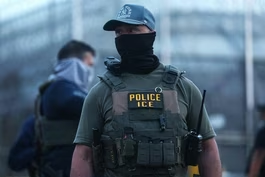
GEOFF BENNETT: Officials in California are calling for an investigation into the actions of federal immigration officers after they allegedly injured and detained a U.S.
citizen this past weekend.
William Brangham has the latest on the growing number of Americans who are being caught up in the administration's enforcement action.
WILLIAM BRANGHAM: The incident in question took place on Saturday in Long Beach, California.
Video shows the moment Ricardo Gonzalez, a U.S.
citizen, is riding an e-bike and then is stopped alongside an unmarked ICE vehicle.
It's unclear whether the vehicle hit him or not.
He's later seen being held face down in handcuffs screaming.
RICARDO GONZALEZ, Detained By ICE: My arm is broken.
Help me.
Help me.
My arm is (EXPLETIVE DELETED) broken.
My arm is (EXPLETIVE DELETED) broken.
My arm is broken.
It (EXPLETIVE DELETED) hurts!
WILLIAM BRANGHAM: Gonzalez was later taken to the hospital and treated for serious injuries.
ICE says Gonzalez was arrested because he was rioting and damaged a government vehicle.
Details of Gonzalez's detainment come as a new investigation by ProPublica has found more than 500 U.S.
citizens have been caught up in the ongoing immigration dragnet.
For more on this, we are joined by ProPublica's Nicole Foy, who was one of the reporters on this series.
Nicole, thank you so much for being here.
Is this incident that we saw reported in California this weekend, does this align with the kinds of cases that you document in your reporting?
NICOLE FOY, ProPublica: It absolutely does, mostly because we found citizens getting detained by immigration officials for a variety of reasons around the country and sometimes in very similar situations like this, where maybe there was a protest nearby or maybe there was just an unexpected encounter between a U.S.
citizen in their neighborhood where they lived with immigration officials, who have really expanded their dragnet and the number of people that they're trying to detain.
And, sometimes, those two people co collide, quite literally in this case.
And there are many, many citizens that we have documented of the more than 500 that we found were detained so far who were also really seriously injured after their encounters as well.
WILLIAM BRANGHAM: I mean, DHS, as you reported in your series, repeatedly says that they do not detain or arrest U.S.
citizens, despite what your reporting shows.
When you say that U.S.
citizens are being detained, as you documented, who are the people that are being detained and what are the other circumstances around their cases?
NICOLE FOY: Yes, it's a mix of folks.
Sometimes, it is folks that immigration officials have accused of assaulting or interfering with immigration operations.
Sometimes, that seems to be the case.
And, other times, there is witness -- witness testimony or footage that really contradicts that narrative.
But there's also been many, many people who have been detained because of questions about their citizenship, whether they were on a construction site and didn't speak English very well, or they were -- there were questions about whether they also were here in the United States without papers.
We have seen people detained in a variety of ways.
WILLIAM BRANGHAM: What happens after these people are detained?
I mean, are formal charges filed?
It seems that if ICE then realizes you have an American citizen in custody, you would think that would be the end of it.
NICOLE FOY: Yes, some people who have been charged with -- who have been arrested on allegations of assault were charged with assault, but we found many who still to this day have not been charged with assault, even if officials release statements accusing them of that.
We also found dozens of people who were held for several days, including at least 24 hours without being able to access their phone or their lawyer or to contact their family and let them know where they were.
So it's -- some people really had a very brief detention, where it was maybe 15 minutes, 20 minutes where they're in handcuffs on the side of the road.
But other people disappeared into a system that was actually very difficult for their loved ones and their lawyers to find them, and at the same time they sometimes were seriously injured as well.
WILLIAM BRANGHAM: You shared a lot of your reporting, including the videos that you compiled, with former immigration officials to gauge their reaction.
What was it that they told you about what you had uncovered?
NICOLE FOY: They were really shocked by what they saw.
These are folks who -- two particular officials that I'm thinking of retired fairly recently.
And they said that, first of all, they had never seen this many U.S.
citizen encounters at all, let alone this level of detention, and that the -- they really characterized much of the use of force, the apparent reason or probable cause for stops, as really troubling, because it did not -- it did not seem that officers were following what they believe that they should have been trained to do.
WILLIAM BRANGHAM: Are there constitutional protections for Americans in these kinds of circumstances?
And, if so, have there been any sort of enforcement actions against officers who might have been accused of or found committing wrongdoing?
NICOLE FOY: Yes, I mean, everyone in the U.S.
has constitutional protections, whether you are an immigrant or you are a U.S.
citizen.
But what our reporting found was just, particularly when you're just looking at these detentions and arrests of U.S.
citizens, really some very troubling examples of possible violations of folks' Fourth Amendment, the right to be free from unreasonable searches and seizures, whether that's accusations of racial profiling or accusations of really excessive force use during the arrest.
But we also found hundreds of people who were arrested because they were participating in a protest.
We found many people who were also film - - were simply filming when they were arrested, and they believe that that is the reason why they are arrested.
The government may disagree, but they believe their First Amendment rights were violated in that way as well.
WILLIAM BRANGHAM: Nicole Foy of ProPublica, thank you so much for sharing your reporting with us.
NICOLE FOY: Thank you for having me.
AMNA NAWAZ: David Beasley spent more than three decades as a Republican, serving as South Carolina's governor before leading Nobel Peace Prize-winning efforts at the United Nations World Food Program.
But in a recent op-ed, he announced he's walking away from his party, as he laments a rise in toxic vitriol emanating from the GOP standard-bearer, President Trump.
And David Beasley joins us now from South Carolina.
Governor, welcome back to the "News Hour."
Thanks for being with us.
DAVID BEASLEY, Former Executive Director, World Food Program: Amna, good to be with you.
Thank you very much.
AMNA NAWAZ: So here is the key line I want to share with viewers from your commentary that published in yesterday's Post and Courier.
You write about the Republican Party -- quote -- "This is not the party that I knew, and it is not a party that I consider myself a member of."
So have you officially left the party?
Are you now an independent or a Democrat?
DAVID BEASLEY: Well, what I am now is an American.
And that op-ed was not meant to be a party switch thing.
It was a declaration that I'm very concerned about what's happening in American politics.
I have run -- I have been elected seven times as a Democrat, one time as a Republican.
And what I tell people today is that vote for the right person regardless of which party they're in that's good for America.
And I think what I have experienced just in the past few years, the vitriolic language, the demeaning, divisive, degrading that has taken place is just completely out of control.
And I don't want to be associated with that.
I haven't changed my values.
I haven't changed my views.
We can find out the differences of issues.
That's America.
But this name-calling and lying about each other and just degrading one another, building yourself up by tearing somebody else down, that's going to destroy this country.
And I have seen it when I was working in countries all over the world with warlords and extremists.
And this is the direction we're heading, and it's not good for America.
AMNA NAWAZ: I think it's also fair to say there's been a lack of civility for many years now.
We have seen a lot of that name-calling and the insults for many years.
So why speak out now?
What pushed you over the edge?
DAVID BEASLEY: Well, as you well know, I have spent the last many years out there in war zones in complex areas.
Eighty percent of our operations in the World Food Program were in areas of war and conflict and violence.
And I have seen what happens when people stop sitting down and talking to one another and start yelling at each other, hollering at each other, not discussing the issues that are good for the people of their particular nation or area.
And that's the trajectory that we're on right now in America.
America can't survive.
We will balkanize this country if we continue this trajectory.
So I'm speaking out now because we have gone way over the line, and we have got to bring it back.
And I'm asking leaders in both parties to do that.
And I pray for this president.
He's got over two years left.
And I have done this with every dictator and extremist and leader in the world, where I say, be the leader that the people of your country need.
President Trump has two more years.
Be that leader that the country needs that will bring this nation back together.
That's what I'm calling on all parties, and particularly the leaders in the parties, because that's what the American people want.
AMNA NAWAZ: As you mentioned, you did begin your career as a Democrat.
You switched to Republican Party in the early '90s or so.
Would you consider running for office again?
And if you did so, would it be as a Democrat?
DAVID BEASLEY: When I ran as a Republican in 1994, I made the decision then that the Republican -- I mean, the parties are a vehicle, a tool to achieve the goals and objectives that you think you want for a state or a nation or a community.
And so I made the decision then that what South Carolina needed for jobs, economic development, infrastructure, and the things that we need to rise our -- raise our state our state up, I said the Republican Party is that vehicle to achieve the goals and objectives.
Today, what I'm focused on is going across America in a breaking bread together tour to bring people together, bring civility back to the process, and I'm asking the voters, vote for a D or vote for an R, depending upon which is the best candidate for that position.
But don't be wed to any party.
Be wed to the ideals that make this nation great.
When I was in the House, my -- House of Representatives -- my best friends are usually my biggest enemies on the floor.
We would fight it out, but then we would go have dinner together.
That's America.
And that's what we have got to get back to.
AMNA NAWAZ: I think it's also fair to say there have been a lot of other efforts to try to bridge some of the same divides you're talking about right now.
What makes you optimistic your effort's going to be successful where all those have failed?
DAVID BEASLEY: I think the spirit and the harmony that people desire in this country is bringing people out of the woodwork, saying, hey, we have gone too far.
And what I have seen so far -- and, Amna, I saw it in other countries, and I would have people: "I can't believe you're meeting with those warlords."
I said: "Well, I have to.
I have got to talk to them to gain access to feed hungry children that are starving to death."
And I have found that, if you come in, no matter who it is and show a little respect and touch the heart, that amazing things happen.
AMNA NAWAZ: Governor, before I let you go, you have been asking voters to look at the merits of each candidate before they pick who they support.
And in the South Carolina Senate race, I got to ask, who are you backing on the merits?
DAVID BEASLEY: Well, I'm asking the voters... AMNA NAWAZ: Is it the Republican, Darline Graham, or the Democrat, Annie Andrews?
DAVID BEASLEY: Well, you got two good candidates.
And, actually, about a week ago, when I saw some of the just trash material coming out about Annie, which just wasn't true, I spoke out saying this is wrong, this is not true.
Look at the merits of the candidates and make an informed decision.
That's what I'm asking the voters in South Carolina to do.
Don't vote based on party.
Vote based on the credentials of the candidate that represents their values, not based on the trash talk and the lies and deception that that's coming out there today.
AMNA NAWAZ: You know the state so well.
Do you really think a Democrat can win in South Carolina?
DAVID BEASLEY: What's happening across America is absolutely remarkable.
I think, no matter which party, if the right candidate puts out the right values and the right views, shows authenticity, integrity, honor, and some humble spirit, well, I don't think there's any doubt people in South Carolina will vote for the right candidate, regardless of party.
AMNA NAWAZ: All right, that's former South Carolina Governor, former head of the World Food Program David Beasley joining us tonight.
Governor Beasley, always great to talk to you.
Thank you.
DAVID BEASLEY: Thank you, Amna.
AMNA NAWAZ: And that is the "News Hour" for tonight.
I'm Amna Nawaz.
GEOFF BENNETT: And I'm Geoff Bennett.
For all of us here at the "News Hour," thanks for spending part of your evening with us.
 New
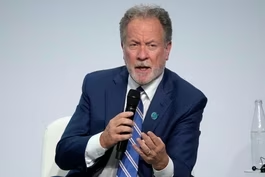
Beasley says Trump's demeaning rhetoric pushed him from GOP
Video has Closed Captions
Former GOP governor David Beasley says Trump's 'demeaning' rhetoric pushed him from party (6m 10s)
 New
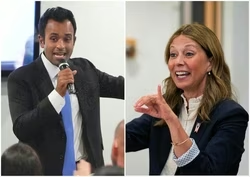
Democratic, GOP strategists on personal attack ad in Ohio
Video has Closed Captions
Democratic and GOP strategists on the deeply personal attack ad in Ohio (7m 20s)
 New
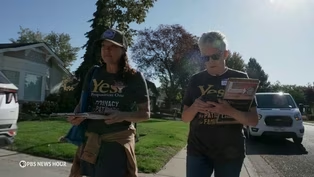
How Idaho's abortion ban reshaped reproductive care
Video has Closed Captions
How Idaho's abortion ban reshaped reproductive care and fueled a fight for change (8m 34s)
 New
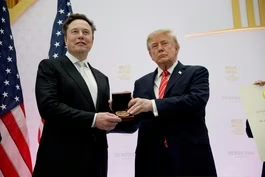
How Musk gained so much power over U.S. security interests
Video has Closed Captions
How Elon Musk gained so much power over U.S. security interests (8m 24s)
 New
Investigation finds hundreds of citizens detained by ICE
Video has Closed Captions
Investigation finds hundreds of U.S. citizens detained by ICE (6m 31s)
 New
News Wrap: Vulnerability prompts race to protect websites
Video has Closed Captions
News Wrap: Cybersecurity threat prompts scramble to protect websites around the world (6m 49s)
 New
Russia frees American prisoner as Witkoff meets with Putin
Video has Closed Captions
American imprisoned by Russia released as Witkoff meets and praises Putin (3m 5s)
 New
The state ballot measures voters will decide in the midterms
Video has Closed Captions
A look at the major state ballot measures voters will decide in the midterms (4m 45s)
Providing Support for PBS.org
Learn Moreabout PBS online sponsorship New Episode
- News and Public Affairs

Today's top journalists discuss Washington's current political events and public affairs.
 New Episode
- News and Public Affairs

FRONTLINE is investigative journalism that questions, explains and changes our world.



 New Episode



 New Episode
 New Episode


 New Episode
Support for PBS provided by:
Major corporate funding for the PBS News Hour is provided by BDO, BNSF, Consumer Cellular, American Cruise Lines, and Raymond James. Funding for the PBS NewsHour Weekend is provided by...