
Michael Sarnoski: What Robin Hood and Folklore Tell Us About Ourselves Today
Special | 28m 4sVideo has Closed Captions
Filmmaker Michael Sarnoski breaks down his revisionist version of the Robin Hood story.
Filmmaker Michael Sarnoski breaks down his creative process behind "The Death of Robin Hood," and explores ideas around identity, the power of storytelling, and more.
Problems playing video? | Closed Captioning Feedback
Problems playing video? | Closed Captioning Feedback
Support for American Masters is provided by AARP, The Rosalind P. Walter Foundation, Thea Petschek Iervolino Foundation, Burton P. and Judith B. Resnick Foundation, The Philip and Janice Levin Foundation,...
Support provided by:

Michael Sarnoski: What Robin Hood and Folklore Tell Us About Ourselves Today
Special | 28m 4sVideo has Closed Captions
Filmmaker Michael Sarnoski breaks down his creative process behind "The Death of Robin Hood," and explores ideas around identity, the power of storytelling, and more.
Problems playing video? | Closed Captioning Feedback
Where to Watch American Masters
American Masters is available to stream on pbs.org and the PBS app.
Buy Now
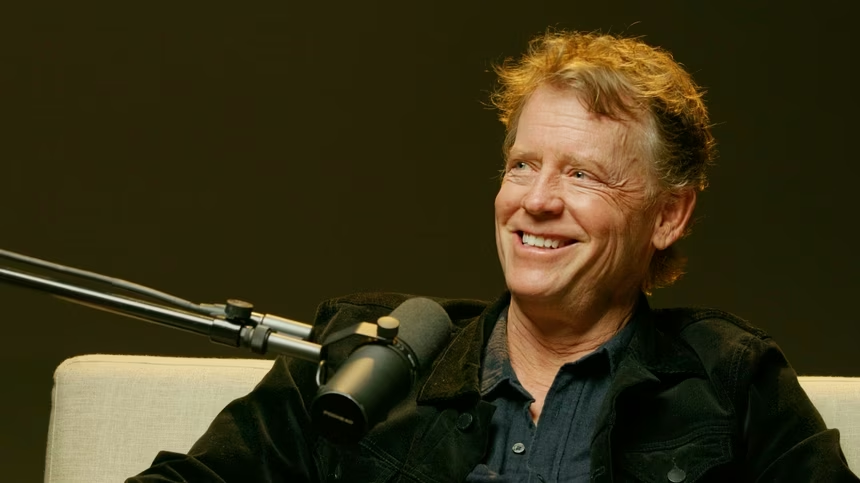
A front row seat to the creative process
How do today’s masters create their art? Each episode an artist reveals how they brought their creative work to life. Hear from artists across disciplines, like comedian Chris Fleming, actor Greg Kinnear, sports journalist Taylor Rooks, and more on our video podcast "American Masters: Creative Spark."Providing Support for PBS.org
Learn Moreabout PBS online sponsorshipMore from This Collection
How do today’s masters create their art? "Creative Spark" presents narrative interviews that go in-depth with an iconic artist about the creation of a single work. Each episode offers a unique window into the world of art and the creative process of artists and cultural icons across a wide range of disciplines, from music and comedy to poetry and film.
Mike Faist Embraces the Unknown
Video has Closed Captions
Actor Mike Faist explores the creative process behind his work on East of Eden. (44m)

The Many Passions of Matteo Lane
Video has Closed Captions
Comedian Matteo Lane on stand-up, painting, singing, performing on Broadway and much more. (55m 8s)
Tyler James Williams on 30 Years of Acting and Protecting the Next Generation
Video has Closed Captions
Actor Tyler James Williams talks about his acting process and what drives his work. (35m 23s)
Why Atsuko Okatsuka’s Comedy Connects Across Cultures
Video has Closed Captions
Comedian Atsuko Okatsuka returns to the show to talk about her creative process. (30m)
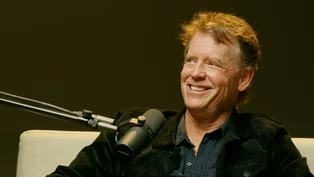
Greg Kinnear on Acting, AI, and Why Movies Still Matter
Video has Closed Captions
Oscar-nominated actor Greg Kinnear shares some "big thoughts." (27m 33s)
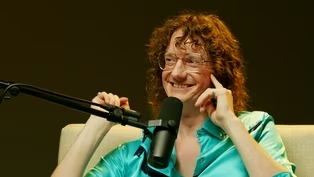
Chris Fleming Embraces the Chaos
Video has Closed Captions
Comedian Chris Fleming talks about the process behind his iconic manic stage persona. (39m 17s)
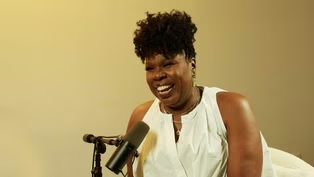
How Leslie Jones Became a Comedian
Video has Closed Captions
Comedian and actress Leslie Jones does a deep dive on her creative process. (31m)
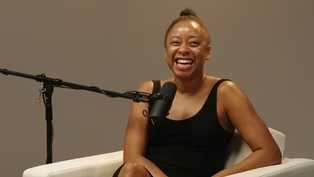
Phoebe Robinson Shows Her Work
Video has Closed Captions
Comedian Phoebe Robinson takes on hustle-culture in biting comedy special. (31m 45s)
Sarah McLachlan: Making Music to Connect and Heal
Video has Closed Captions
Singer-songwriter Sarah McLachlan opens up in a candid interview about making music. (37m 19s)
How Natasha Rothwell’s Life Brought Her to “The White Lotus”
Video has Closed Captions
Actress Natasha Rothwell on her creative process in "The White Lotus." (33m 40s)
Daniel Dae Kim Leads Spy Drama and Fights for Industry Change
Video has Closed Captions
Actor Daniel Dae Kim on his groundbreaking career and new project, "Butterfly." (21m 48s)
Phil Rosenthal’s Secret Recipe: Good Food and a Laugh
Video has Closed Captions
TV writer and host Phil Rosenthal talks about finding our shared humanity in food and comedy. (22m 53s)
Providing Support for PBS.org
Learn Moreabout PBS online sponsorshipWhat do you think is the responsibility of storytellers?
Storytelling is how we understand ourselves.
Like storytelling is religion.
Storytelling is how we place ourselves in the cosmos.
Like the stories we tell ourselves about the things that we do end up becoming more important than the things that we do usually.
So we're becoming more aware of kind of the role of that kind of narrative in our own lives and in culture.
And um for better or worse, I don't know if it's a good thing.
Do you think it's a good thing or a bad thing?
You know, knives cut bread as well as they do flesh.
Like, I think uh I think anything can be a good or bad thing.
It's about how we choose to responsibly use it and use it through kindness and empathy.
This is American Masters Creative Spark and I'm your host Joe Skinner.
Our guest today is filmmaker Michael Sernowski.
The director of Pig and A Quiet Place Day One is back with an uncompromising take on the Robin Hood story, starring Hugh Jackman in the title role.
When you hear Robin Hood, you probably think of the heroic outlaw who steals from the rich and gives to the poor.
But what if he was just an outlaw, a violent outlaw who has to reckon with his past, the death of Robin Hood takes that on and asks us to reconsider our own mythmaking and how we define ourselves.
What drew you to the mythology of Robin Hood?
I mean, I think like I don't .. little boy growing up in Wisconsin, I had seen Disney's Robin Hood and I loved that.
And then I had this kind of mentor father figure who gave me a copy of his like childhood Robin Hood book from like the ' 40s.
Uh, and I remember reading that after having seen the Disney Robin Hood and it was so different.
It was like this is crazy.
Uh, and there was this one story in it that was Robin Hood's death.
And I always found that really fascinating.
I think the strange like combination of the childish version of the Disney Robin Hood that I love and is so fun and then realizing that like, oh, wait a minute.
This mythic figure died like a like a normal person.
I'm trying to like come to terms with that and I think I spent the rest of my life trying to come to terms with that and then I had to make a movie about it to deal with it.
I guess what made the Robin Hood mythology serve as such a good scaffolding for the kind of story you wanted to tell?
Yeah, I mean I think for this project where it came from was you know this initially that fascination with the idea of like this sort of immortal folkloric figure and the sort of very human death in that story about him and then I I was always really fascinated by the relationship between Robin and the prioress in that story.
It's it's a pretty short simple story and I always kind of felt like there's more meat on those bones that I want to explore.
Um so I think for me it became about dissecting that relationship between Robin Hood and this Priyus whose sister Bridget played by Jod.
Um and really making it go beyond the sort of surface level story that the old ballads had and diving into like what would that world actually feel like?
What would these characters feel like?
What would this interaction feel like?
um without giving too much away, just like what how would this play out on a human level beyond just like the few lines in the in the old ballads.
Um and then I I really went back to the old ballads to kind of try and find what these characters might be like cuz there there's sort of these like five original Robin Hood ballads that are sort of the earliest written ballads and they're very different from the Robin Hood we think of nowadays.
Like they don't have the crusades.
They don't even really have that steal from the rich give to the poor.
like he's this, you know, wily outlaw who does brutal things, cuts off people's heads and wears them into town to take on their identity.
Like very kind of like disturbing folklore fairy tale vibe that we were familiar with in those sorts of stories.
Um, so I used that as a lot of inspiration for what this character actually was going to be.
Um, and then it was all just fun and games from there.
Could you sort of re.. original story was, what that premise is between the two characters?
Yeah, the the original story is basically Robin is injured or falls ill, ends up at um Kirkless Priaryy, which we've changed a lot of a lot of these details, this is not the plot of the of the movie, but the original story.
He ends up at this priary um and then a prior who turns out to be basically an evil nun uh blood lets him to death because in some it's that she's, you know, working with uh some other guy that has a vendetta against Robin.
and others.
It's either way it's always portrayed as like she's the bad evil lady who decides to kill good Robin and then he uh at the end of the story the part that I think most people are familiar with is at the very end of the story he uh shoots an arrow out the window and says wherever that lands bury me and the lore is that that's where you know his grave is is near Kirkless Priaryy.
Um but that's the basic thing.
evil nun kills goodly Robin who was heroic all his life and he decides not to take his vengeance because he's such a good guy and then he says bury me where my arrow lands you know obviously the death of Robin Hood though subverts that in several ways so what drew you to that subversion and and what what is that subversion what is this the premise of this I think I think I learned early on not to make subversion sort of the point of it like I think I started from a place of I want to examine these two characters this prior and Robin Hood and I really just want to dissect that relationship, examine what these final days look like.
And I think a lot of the subversion kind of just came naturally from that.
It's like, okay, what if Robin, what if the prior wasn't this evil wench who just like hates the good guy?
And what would the life of a prior have looked like back then?
And then I started researching Hildigard von Bbingan who was kind of this um polymath German nun from that time period who was like a composer and a doctor and a nun and was this sort of like fascinating character.
Um and then I started researching like what would the what would the life of a medieval outlaw or bandit have actually been like?
And I was listening to a lot of lectures and there was this one quote that I loved that was um you know people think of medieval battles as like knights in shining armor riding into battle when really it was mostly peasants beating each other to death with shovels.
And I was like, that's Robin's world.
And like, and even one of the earliest little lines about Robin Hood in an old history book called the Scotch Chronicon says, you know, he was this murderous cutthroat who all the common folk are so obsessed with telling stories about.
And and so I was kind of like, okay, like what if he did just live this brutal life and then lived long enough to see the stories that maybe he even parttook in telling turn into the narrative of his life?
And like what would that do to someone when they're grappling with the difference between the sort of like hard violent life they lived and these stories that are being told and trying to figure out, you know, how does my life end and where does this go and what does it mean?
And then they meet this person that kind of opens up their understanding of the world and they form this relationship that kind of gives them a second chance at connection and uh and so it, you know, there are subversive things about that, but in my mind that all sort of unfolded from just trying to like dissect these characters a little more deeply.
I help those who come to this island and people who change their course.
I have killed so many I could not give you a count.
It's a curse.
The first act is pretty stark brutality.
Yeah.
What was the motivation be.. introducing us to this world in such a way?
Yeah.
Yeah.
I mean, that start.. one if we're going to say Robin lived a violent life and we need to show that to you in a way that it's not just like, oh yeah, of course, everyone lived a violent.
It's like, no, no, no, this is we're not kidding.
Like, he wasn't a good guy and he did bad things and lived a violent life.
Uh, and so it was the the goal of that was to demonstrate that and sort of show people that if you're coming into the movie being like, "Oh, I want to see an action adventure with Robin Hood."
It's like we'll show you that but in a light that like by the end of it you should be like oh my god like this violence feels like upsetting.
Like we tried to approach the violence as more of almost like a war movie or a horror movie.
Like the violence should feel very real and visceral to the point where like it's not fun violence.
It's violence with the goal of portraying this is maybe what it kind of felt like to live in those times in the most brutal parts of those of those times.
And um and so that was kind of the goal was to be like, let's sort of give you what you think you want with the sort of Robin Hood action, but like portrayed in a way that's like so grounded and so visceral that you can really understand what this character is grappling with then for the rest of the movie as he's dealing with this kind of legacy of violence and this cycle of violence and and what his role has been in that and what the role of storytelling has been in that.
Um, so we kind of needed to land that, which is part of why at the first third of the movie, um, it's all shot in 239.
It's like very wide.
And then as we get to the priary, it changes to 166.
So the aspect ratio changes to this much more square aspect ratio that really emphasizes sort of the internal worlds of these characters and the intimacy.
But we wanted to kind of be like, here's your here's your epic for what it's worth.
You should probably have some qualms with with some of it.
And and now let's sort of dissect that and see how the characters feel about that.
Yeah, it reminded me of this filmmaker Steve McQueen, the movie Hunger.
The way it's divided structurally, too.
I mean, it seemed like you were really thinking about structure in specific ways.
Yeah, absolutely.
Hunger was a actually that was a that's I was trying to think of a list of of movies that were influences, and that's actually a great one to add on there.
That was definitely one I thought about.
Um, yeah.
No, I mean it's there's a pretty stark transition from the beginning to the second half and they should feel they're very different, but it should all be rooted in that Robin character and like what he's experiencing and like you know this is the life he has lived at the beginning and then he finds this new life and because of that he kind of changes how he thinks about himself and his history and the the meaning behind his life but it's still like he he is the through line and that's sort of what Hugh is great at is that he can do just the you know anim animalistic violence but Then also the the warmth and keenness and tenderness that is required to kind of pull off the second half as well.
And watching him kind of do that transition over the course of the movie was essential and so fun like that.
I mean that's what he kind of nailed.
Yeah.
There's such a muscular kind of tenderness to it the way he portrays it.
Uh what did you always have Hugh Jackman in mind for the role when you were writing it?
Did you were you kind of visualizing as you're writing the characters the actors that you had in the roles?
I I'm sure someday I will not be saying this, but I've never to this day written a part with an actor in mind.
Like I actually kind of go out of my way to try not to do that because I really I love the writing process and I love going into my little hermit mode.
And I and I like writing a character that I feel connected to on the page without assigning even like the face of an actor to that person.
And so I didn't write Robin with anyone in mind.
And yeah, it wasn't until Hugh read the script and just I spoke to him and he just got it on on every level that it was like, "Yeah, this should be you."
Like I want to write characters that feel full on the page and then when you find an actor who really understands them, they will get exactly what you're going for on the page, but then bring some whole new level to that character.
And that was what Hugh clearly was going to do with it.
So, um, yeah, I've I I have yet to write a part for any specific person, but, um, I think this part was kind of destined for him.
I kind of feel that way with like most of my movies that like, yeah, by the time you finish it, like, who else could that have been?
People speak of Robin Hood, tell stories, they're all ours.
He was not a hero.
You were a murderous brigant.
We were monstrous.
I am the outlaw.
Robin Hood.
I always wondered with projects like this, the tongue of the film is so different than our native tongue.
How did that process happen?
What did you do there?
Yeah, I mean it's a .. think, you know, it's watching medieval movies, watching like like that's a part of it, but I also think it's kind of the same thing as how we interact with with mythological characters.
Like we all have this kind of idea of Robin Hood in our minds that is like probably it's like 75% the same for all of us, but there's but it's it's not coming from one particular source.
It's this weird amalgamation of sources and like what feels true to that character depends on what your exposure to that character has been.
But there is this sort of like vague communal cultural sense of that character.
And I think it's the same with like what feels right for period dialogue where like I wasn't I wasn't always like we definitely worked with a with a consultant for historical for dialect for you know all the sort of historical details of the movie but like when I was writing that dialogue it's less about being like oh I'm checking old texts like if you wrote a text in middle English no one would understand a word of of the movie.
So, it's about like capturing something that kind of like feels right and doesn't feel like you're trying to put something on, but also it's it's I I don't know like it sort of just felt like I was trying to tap into some way of speaking in some rhythm that like was buried deep in my mind since I was a little kid of like, yeah, this is what a Robin Hood movie should sound like.
And it's not overly lyrical or overly Shakespearean, but it's also not modernday.
And it just kind of felt right.
and I tried not to overthink it, but it had a certain rhythm to it that made sense and the actors seem to understand it and respond to it and um but yeah, I think it's like in the same way that we have our cultural understanding of Robin Hood, we have our cultural understanding of like what medieval speaking should sound like and then we each have our own individual one and I think this was kind of my individual version of that.
So going into this, I kind of assumed you would be more dogmatic about authenticity in a way, but it sounds like there's a balance there of being, you know, faithful to the period like you are with the violence, for example, but then balancing that out with your own personal connection to it.
Yeah, absolutely.
I mean, it's you're dogmatic about authenticity with certain things, but at the end of the day, you want a movie that feels real.
And like with everything you do in a movie between eyelines and lights and all that stuff, you're lying in order to feel real.
So it's the same with dialogue, with history, it's like, okay, how are we how what is the thing inside of me that I'm trying to capture that I'm trying to explore?
How do I communicate that to an audience and make it feel lived in and real?
At times accurate truth is is the one way to achieve that.
But at times like well-placed lies and combinations and adjustments is how you make something feel real.
So it was kind of just you're always kind of trying to find the organic way to find that.
And like there's tons of research and real stuff in here.
Like I I'll never make the claim that this is like some 100% historically accurate movie, but that's always something that we started from a place of like historical accuracy and then you make the nudges and adjustments as feel right for for the project.
You know, I just feel like in our present day there is this kind of resurging interest in exploring old mythologies and exploring old folklores.
Uh what do you think it is that makes mythology and folklore attractive to a contemporary audience?
Yeah, I think I mean I think there are so many things like every every folklore has its kind of specific reason that it existed historically and if it's still around today, it's probably because that reason evolved and changed.
And that was true for Robin.
Like all these things, they meant something when they started.
They still mean some of that, but like people found ways to repurpose that and to tell their own stories around it and they've stayed alive.
Um, but I think also on top of that, we've become so steeped in like storytelling and narrative nowadays, and we always have been as humans.
Like that is just language.
That is cavemen sitting around a fire telling each other stories.
But like I think I think we're surrounded by narratives constantly nowadays with like the internet and social media and like that's easy to get into.
But like I think because of that we should be and hopefully are more curious about like how do we form these sorts of narratives and how do we decide which ones sort of break through and how do we decide which ones we're going to like integrate into our own selfidentity.
Um, so I think explorations of things like these longheld narratives that we don't always think about and and trying to like sort of break them down and see where they came from and see what they might mean to us and what the responsibility around those stories is uh is enticing because we're sort of aware of oh wow storytelling has a big role in our lives now.
We're being sold stories constantly.
How do we navigate that that water?
Um, so I think there is like inherently that's something that we want to dissect and explore or at least we should.
Sometimes we're told not to and to like ignore that stuff and not think about it, but I think we should.
And also uh now too people are even more aware that there isn't necessarily an absolute truth to storytelling and that seems especially resonant in the film.
There's definitely, you know, I think if you asked like 10 years ago the average person what like meta narrative meant or something like they would be like what are you talking about like but like like now that like memes and things like all these things that used to be sort of in the I don't know some sort of scholarly world and Dawkins and like like now it's like oh yeah we all know what a meme is and we all know what meta means and like all these sort of like we're so like self-aware of the version of ourselves that we present to society because of social media and all this stuff that like we're we're becoming more aware of kind of the role of that kind of narrative in our own lives and in culture and um for better or worse.
I don't know if it's a good thing, but uh but it's definitely something we're aware of.
Do you think it's a good thing.. thing?
I just.. curious.
I I think I mean like you .. cut bread as well as they do flesh.
Like I think uh I think anything can be a good or bad thing.
It's about how we choose to responsibly use it and use it through kindness and empathy.
You know, you've talked a little bit about Robin Hood when you were a kid, but I kind of want to dive a little deeper into that.
So, you know, you mentioned that Robin Hood was a story that your dad shared with you when you were a kid, right?
Yeah.
I think so.
The the full story is that the So, my dad was a very outdoorsy guy.
He was like an Eagle Scout.
He sort of I think you see some of that in Pig like he fostered sort of a love of nature and a respect for that in me.
Um and uh and you know we loved comic books and Robin Hood and all that stuff.
Like we would watch Disney's Robin Hood together.
Um he would read me Spider-Man comics at night like like we were we were nerds who liked nature.
That was our that was our jam.
Uh and then he he passed away when I was nine actually coming back from a camping trip.
We were on we were on this big beautiful camping trip in the Boundary Waters and um and on the way back uh he died in a car accident and actually the the mentor who gave me Robin Hood it was like it was sort of in reaction to my dad dying my relationship with our neighbor became much closer and he gave me this book as kind of this like hey kiddo like read about Robin Hood like I know it was something you and your dad enjoyed.
Uh and so you know the deeper answer is that that whole sort of challenging of oh the childish understanding of Robin Hood and the understanding of Robin as this folkloric character who actually could die like any normal human being happened right at that moment when I was dealing with that with my own dad and trying to like integrate that understanding into my own life.
Um, so I think that's that's probably part of why this has like stuck with me for so long was that the idea of an iconic masculine figure in your life, be it Robin Hood or your dad dying and what that means and and how you understand them and their role in your lives and like the lessons you've learned from them.
Like it was just something that kind of was swirling around at that time and has stuck with me as something that I've been dealing with for a long time.
Wow.
Yeah.
I mean, so my dad also died when I was young and something that your film made me think about in relation to that is just the grieving process.
Um, and the way that you know after somebody passes that's a close part of your life.
So much of this the narrative around them is developed after their passing in a lot of ways whether it's 30 years or 20 years or whatever it might be.
And so I'm just curious, you know, to learn more about that thinking with the film.
I mean there is there's obviously this running thing in the story about the role of narratives, the role of how we explain ourselves to other people and how the explanations of ourselves get integrated into our own identity.
Like the Little John character, Little John/ Edward, who's played by Bill Scarsgard, is kind of exactly that.
He was, in my mind, he was basically like a child soldier for Robin.
Like Robin recruited some young kids and they became like what people think of as the merry men and he, you know, he used Robin used stories of adventure and excitement to kind of like create a gang of criminals that would follow him and give him power and all that stuff.
And and he told those stories so much that now little John, who's grown up and become a father, kind of doesn't know what was true.
Like in his mind, he I always would describe him as a monster baby.
like he's this sort of amoral childish character who's also kind of sweet and like thinks back on their adventures is like oh we had such grand times and like we're on such a grand adventure as he's like beating some like poor peasant to death and like even he as he's become this kind of god-fearing father to little Margaret he doesn't know what that meant and it's sort of taken control of his own identity um and the movie becomes really about for all the characters everyone kind of has like two different identities that they're trying to grapple with.
Like, you know, there's Edward and Little John.
There's the Prior and kind of the true story of who she was before the Priyus.
There's Robin and Randolph.
Like, there's all these there's there's the leper and his identity.
And like everyone kind of has these sides of themselves that they're trying to figure out how like a lot of the story becomes Robin trying to explain to little Margaret um kind of how can she make sense of the two sides of her father that she saw like she was raised with this you know god-fearing loving farmer father named Edward and then for the last little while he turned into this kind of like psycho monster named Little John that she doesn't have any frame or reference for and like how do you explain to them well both of them were your other people are complicated kiddo like how do you do that?
Um and yeah so it definitely that is all throughout the story.
What do you think is the responsibility of storytellers?
Uh I think we have a huge responsibility as storytellers.
I think we also have a huge responsibility to understand that we are all storytellers and that the stories we tell ourselves and the stories we allow to be told to us and that we allow to sort of bring into our identity shape us and all the people around us.
So yeah, I think storytelling is how we understand ourselves.
Like storytelling is religion.
Storytelling is how we place ourselves in the cosmos.
Like storytelling is, you know, I don't want to say storytelling is everything like like we do things and the stories we tell ourselves about the things that we do end up becoming more important than the things that we do usually.
So yeah, we have a huge responsibility.
Um, and I think we all share that responsibility and uh, we should acknowledge that and like take it seriously and and use those, you know, the lame thing would be like use those for good.
But yeah, use those know that we have the power to influence other people with our stories and try to tell those stories in a way that uh, in our minds could maybe help people or open them up or open them up to their responsibility to storytelling.
Um, yeah, there's there's a lot of responsibility, but we also can't let that like run our lives.
It's like, you know, I feel a huge responsibility as a filmmaker to tell stories that I think, you know, mean something to me or like can express something that I I like to tell stories that are kind of right on the edge of what I'm grappling with as a human being.
Like, I don't want to just like I'm not trying to like tell some lessons that's like, "Hey kids, like sit down and like here's the story you're going to learn for tonight.
Here's the lesson I want you to take."
Like like I want to tell stories that are, hey, look at me trying to figure out something that's just on the periphery of my own like moral understanding of the world and and what I'm trying to deal with in my own life.
Let me bring you into that internal conversation I'm having and let me make a movie that like is that so we can see if we can get a little closer to something that feels true or something that feels whole together.
Um, so I'm not saying that like we have to like tell basic moral stories, but we have to sort of like, you know, allow like make allow ourselves to be vulnerable and allow the audiences to be vulnerable with us as we explore murky territories.
So then what do you hope people take away from this film or any film that you're making?
Yeah.
Um, I mean different things in every film.
Uh I I mean probably the recurring things that I hope people will take away are uh hope like I I tend to make films you know a lot of films about death.
Everyone sort of assumes like, oh, you make like bleak, sad films.
And I'm like kind of I actually think I make very like hopeful films because I like to start in a very bleak, difficult place and then and then see if we can get our characters to a place where like we're not discounting the bleakness or the horrors of that world, but we're getting somewhere where we're like we feel like we can do something about it or we feel like we can find peace in that.
Um, so you know, I think if you look at all my movies, they all tend to be about like someone who sort of like has decided, okay, this is my life now.
Like they've they've like isolated themselves or decided that like, you know, for all intents and purposes, like I've kind of done what I'm going to do for better or worse.
And, you know, I've lost connection with the world.
I've lost connection with myself.
But then even in those moments of deepest darkness and disconnection, if you are just a little bit open to the world around you, you can find new connections and new ways of understanding the people around you and yourself and that you can still grow and you can still find hope.
Um, and it's not always going to be pretty and it's not always going to be easy and it's usually going to involve having to face the darkest sides of yourself that you probably have been trying to keep at bay and that's why you've isolated yourself and but I think all of that taps into just our own basic sense of stasis and a want a desire to change and improve.
It's like we always feel kind of like well I'm just a schmuck who's like stuck and like not going to do anything more but like oh but like maybe like you know if the right thing happens maybe I can like still see the beauty in the world and we all we all want that and and that's something I want people to feel like they can they can access.
I think that's a beautiful note to end on.
Thanks so much for coming in.
Thank you so much.
This was great.
That's our show.
A big thank you to Michael Sernowski for taking the time to talk.
American Masters Creative Spark is a production of the WNET Group Media made possible by all of you.
This episode was produced by me, Joe Skinner.
Our executive producer is Michael Caner.
Original music is composed by Hannis Brown.
This episode was mixed and mastered by Josh Broom.
Funding for American Masters Creative Spark is provided by the Rosalyn P. Walter Foundation, the Anderson Family Charitable Fund, the Mark Hos Foundation, Sue and Edgar Wenheim III, the Trina Endowment Fund, the Ambrose Monell Foundation, the Kate W Cassidy Foundation, the Philip and Janice Leaven Foundation, and by PBS viewers like you.
Thanks.











Support for PBS provided by:
Support for American Masters is provided by AARP, The Rosalind P. Walter Foundation, Thea Petschek Iervolino Foundation, Burton P. and Judith B. Resnick Foundation, The Philip and Janice Levin Foundation,...